


The difference between medium and dark roast isn't just color or intensity — it's about what survives the heat. A medium roast stops after the first crack, preserving the origin's natural flavors: body, balance, acidity, and sweetness. A dark roast pushes past that threshold, overwriting those characteristics with bitterness. If you're choosing between medium roast vs dark roast, the real question is: do you want to taste the coffee, or the roast?
What Makes a Roast Medium or Dark — And Why It Matters
The difference between medium and dark roast isn't just about color or intensity — it's about what survives the heat. A medium roast stops after the first crack, that audible pop when the bean's internal pressure releases. That's the window where you keep the body, keep the balance, and keep everything the origin put into that bean.
At C8th, that's exactly what we're protecting. We watch color closely during that window — not just temperature readouts. The goal is a cup that's balanced, with good body and the full flavor the Colombian land intended. Once you push past that threshold into dark roast territory, you're not developing flavor anymore. You're overwriting it.
- First crack: The point where medium roast development begins — internal pressure releases, sugars caramelize, and origin flavors are preserved.
- Second crack: The threshold into dark roast — cell walls break down, oils surface, and bitterness dominates.
- Color as a guide: At C8th, roast color is monitored visually alongside temperature to protect the bean's natural profile.
How Colombian Beans Respond to Each Roast Level
Here's something most people don't realize: a dark roast doesn't just change the flavor — it erases it. And with Colombian beans specifically, that's a real loss.
High-altitude Colombian coffee from regions like Huila or Nariño carries naturally complex cup profiles — acidity, sweetness, layered aromatics that come from elevation, processing, and soil. Take those beans to a dark roast, and what you enhance is bitterness. Everything else gets buried.
Having worked directly with Colombian farms, I can tell you that the density and structure of high-altitude beans make them particularly expressive at medium roast. The slower cellular development at elevation — beans grown above 1,600 meters — creates a tighter, denser structure that holds flavor compounds longer during roasting. Push those same beans dark, and you're burning off the very complexity that makes them worth sourcing.
I'd also say something that might surprise you: dark roasting is widely used to give market value to lower-grade coffee — including defective beans — and sell it at very low cost. That's commercial coffee. A quality specialty bean has no business being pushed that far.

Flavor, Acidity, and Body: A Side-by-Side Breakdown
A specialty medium roast Colombian coffee gives you a balanced cup — medium to high body, pleasant acidity, and tasting notes that can range from chocolate and caramel to panela (raw cane sugar), and depending on the lot, you might find berry, citrus, or even floral tones. A dark roast, by contrast, delivers a flat bitterness that masks everything the origin worked to develop.
What I love about medium roast is the sensory experience it opens up. You start searching for flavor with your taste buds. It's not just "coffee" — it's a specific experience that changes cup to cup, farm to farm.
A dark roast, by contrast, doesn't really have a "cup profile" in the specialty sense. By definition, it's burnt. The characteristic bitterness takes over everything else. That's why most people who drink dark roast add sugar — not because they prefer it sweet, but because the sugar masks the bitterness.
Medium roast doesn't need that. And here's something that catches people off guard: when you make a cappuccino with a good medium roast, you don't need sugar either. The milk's natural sweetness is enough, because the coffee underneath is already balanced.
The Caffeine Myth — What the Science Actually Says
Dark roast does not mean more caffeine. Roasting actually burns off a small amount of caffeine, so technically dark roasts have slightly less — though the difference is negligible in practice. What changes between roasts is flavor chemistry, not your morning jolt. Whether you measure by weight or by volume, the caffeine gap is too small to feel.
- By weight: Medium and dark roast contain nearly identical caffeine levels per gram of ground coffee.
- By volume (scoops): Dark roast beans are less dense, so a scoop of dark roast may contain slightly less caffeine by mass.
- Bottom line: Choose your roast for flavor, not for caffeine. The difference is not physiologically meaningful.
Which Roast Works Best for Your Brewing Method
This is where I push back on a belief I hear constantly: that espresso requires dark roast. It doesn't. You can brew any roast level in any method — espresso, pour-over, French press, cold brew. The brewing method and the roast level are independent choices. What matters is the grind size, the ratio, and the quality of the bean.
That said, here's how I'd pair roast levels with brewing methods based on my experience cupping and brewing C8th coffees across every format:
- Espresso: Medium roast works beautifully — the pressure extraction highlights sweetness and body without amplifying bitterness. A 1:2 ratio (18g in, 36g out) at 93°C gives you a balanced, complex shot.
- Pour-over (Chemex, V60): Medium roast is ideal. The clarity of the brew method lets every flavor note come through. Use a 1:15 ratio and water at 92–94°C.
- French press: Medium roast shines here — the full-immersion method adds body and rounds out the acidity. A 13g to 200ml ratio works well for a comparative brew.
- Cold brew: Medium roast produces a naturally sweet, smooth concentrate without the harsh bitterness that dark roast cold brew can develop over a 12–18 hour steep.
- Drip / automatic: Either roast works, but medium roast will reward you with more complexity if your machine brews at the correct temperature (90–96°C).
The rest is habit and culture, not necessity. In my experience, the people who insist espresso needs dark roast have simply never had a well-pulled shot from a quality medium roast Colombian bean.
How to Choose: A Practical Framework for Coffee Drinkers
When someone tells me they "only drink dark roast," what I hear is: they've never been given a real reason to try anything else. Commercial dark roast is everywhere, and if that's all you've had, of course that's your reference point. Here's a simple framework to find your ideal roast based on how you actually drink coffee:
- You add sugar to your coffee: Try a medium roast without sugar first. If the coffee is good, you won't need it. The sweetness is already there.
- You add milk or cream: Medium roast holds up well and complements dairy without the bitterness getting in the way. A cappuccino with a good medium roast needs no sugar.
- You drink it black: Medium roast gives you the most to explore — acidity, sweetness, specific tasting notes. Dark roast black is just bitter.
- You're new to specialty coffee: Start with a Colombian medium roast and brew it simply. Don't overthink the transition. Let your taste buds have the experience.
- You want bold and strong: Medium roast can be bold — body and strength are not the same as bitterness. A well-extracted medium roast has plenty of presence in the cup.
Try a Side-by-Side Tasting at Home
Set up a simple comparison with both bags side by side — medium roast and dark roast. Before you grind anything, smell the beans. The fragrance difference right there will tell you a lot. Then follow these steps:
- Smell the dry grounds: Grind both separately and pay attention to the aroma coming off each grind. Medium roast will smell sweeter and more complex; dark roast will smell sharper and more one-dimensional.
- Brew with the same method: Use French press or Chemex for both, and keep the ratio consistent — 13g of coffee per 200ml of water at 93°C.
- Taste medium roast first: Look for acidity, sweetness, any specific notes — take your time with it. Then move to the dark roast. You'll feel the bitterness immediately by comparison.
That contrast is the whole lesson. At C8th, we don't offer dark roast — not because we're being precious about it, but because everything we're trying to deliver in the cup requires a medium roast. The origin characteristics, the balance, the flavor that the land put into those beans — it only survives up to a certain point in the roast. We stop there on purpose.
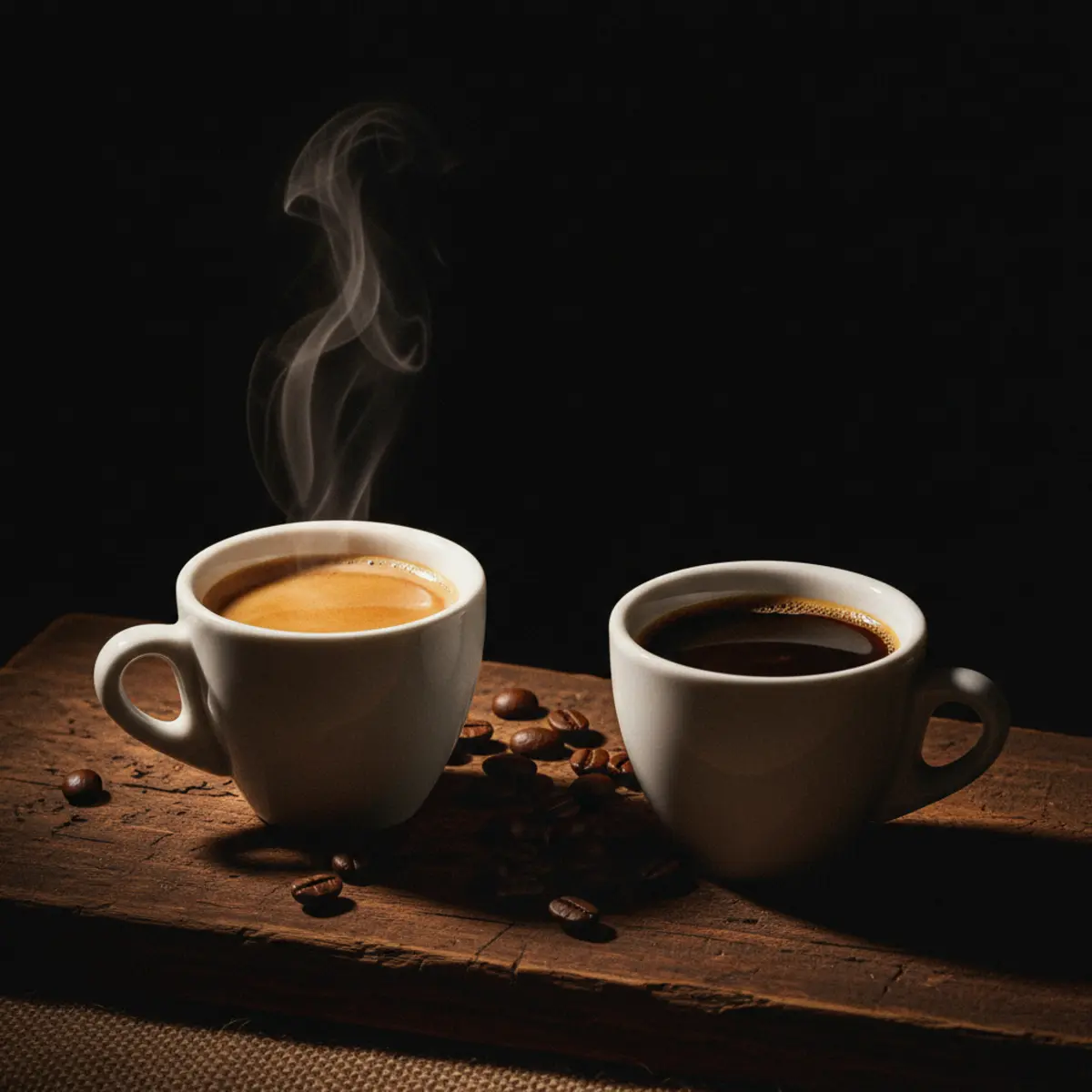
 A simple side-by-side home tasting setup — same method, same ratio, different roast levels. The difference becomes undeniable in a single cup.
Does dark roast have more caffeine than medium roast?
No. Dark roast does not have more caffeine. Roasting burns off a small amount of caffeine, so dark roasts technically have slightly less. Measured by weight, the difference is negligible. Choose your roast for flavor, not caffeine — the gap is too small to feel in the cup.
Is medium roast or dark roast better for espresso?
Medium roast works excellently for espresso. The pressure extraction highlights sweetness and body without amplifying bitterness. The belief that espresso requires dark roast is a cultural habit, not a technical requirement. A quality Colombian medium roast pulled at 93°C with an 18g dose produces a balanced, complex shot.
What does medium roast coffee taste like compared to dark roast?
Medium roast coffee is balanced — medium to high body, pleasant acidity, and tasting notes ranging from chocolate and caramel to panela, berry, or citrus depending on the origin. Dark roast is dominated by bitterness, with most origin-specific flavors burned away. Medium roast tastes like the coffee; dark roast tastes like the roast.
Why do people add sugar to dark roast coffee?
Most people add sugar to dark roast because the bitterness is intense enough to need masking. It's not a preference for sweetness — it's a correction for the roast. A well-made medium roast specialty coffee typically doesn't need sugar because the natural sweetness from the bean's sugars is preserved during roasting.
Which roast level is best for Colombian coffee?
Medium roast is best for Colombian specialty coffee. High-altitude Colombian beans from regions like Huila and Nariño carry complex flavor profiles — acidity, sweetness, layered aromatics — that are only preserved at medium roast. Dark roasting erases these characteristics and replaces them with generic bitterness, wasting the origin's natural quality.
If you want to taste what we're talking about, explore Clemente 8th's medium roast Colombian single origins and brew one slow. Or grab two different bags and run the side-by-side yourself — you'll understand the difference in a single cup.


