


Sierra Nevada coffee comes from the Sierra Nevada de Santa Marta — a coastal mountain range in northern Colombia and one of the most ecologically complex coffee-growing regions in the world. Grown between 1,000 and 1,600 masl under indigenous stewardship, this single-origin Colombian coffee delivers a silky body, malic acidity, and honey-like sweetness that sets it apart from every other region in the country.
What Is Sierra Nevada Coffee and Why Does It Stand Out?
Sierra Nevada coffee comes from the Sierra Nevada de Santa Marta — a coastal mountain range in northern Colombia and one of the most ecologically complex coffee-growing regions in the country. What makes it stand out isn't just the altitude or the geography. It's the combination of indigenous stewardship, a challenging coastal climate, and farming practices that most of the coffee world has never even attempted to replicate.
Our roastery connection to this region started as a logistical decision when we relocated there. But what kept us rooted was the quality. Having worked directly with Colombian farms across the Sierra Nevada, cupping their harvests against strict scoring requirements, what we found surprised us — even with Colombia's already high bar for specialty coffee.
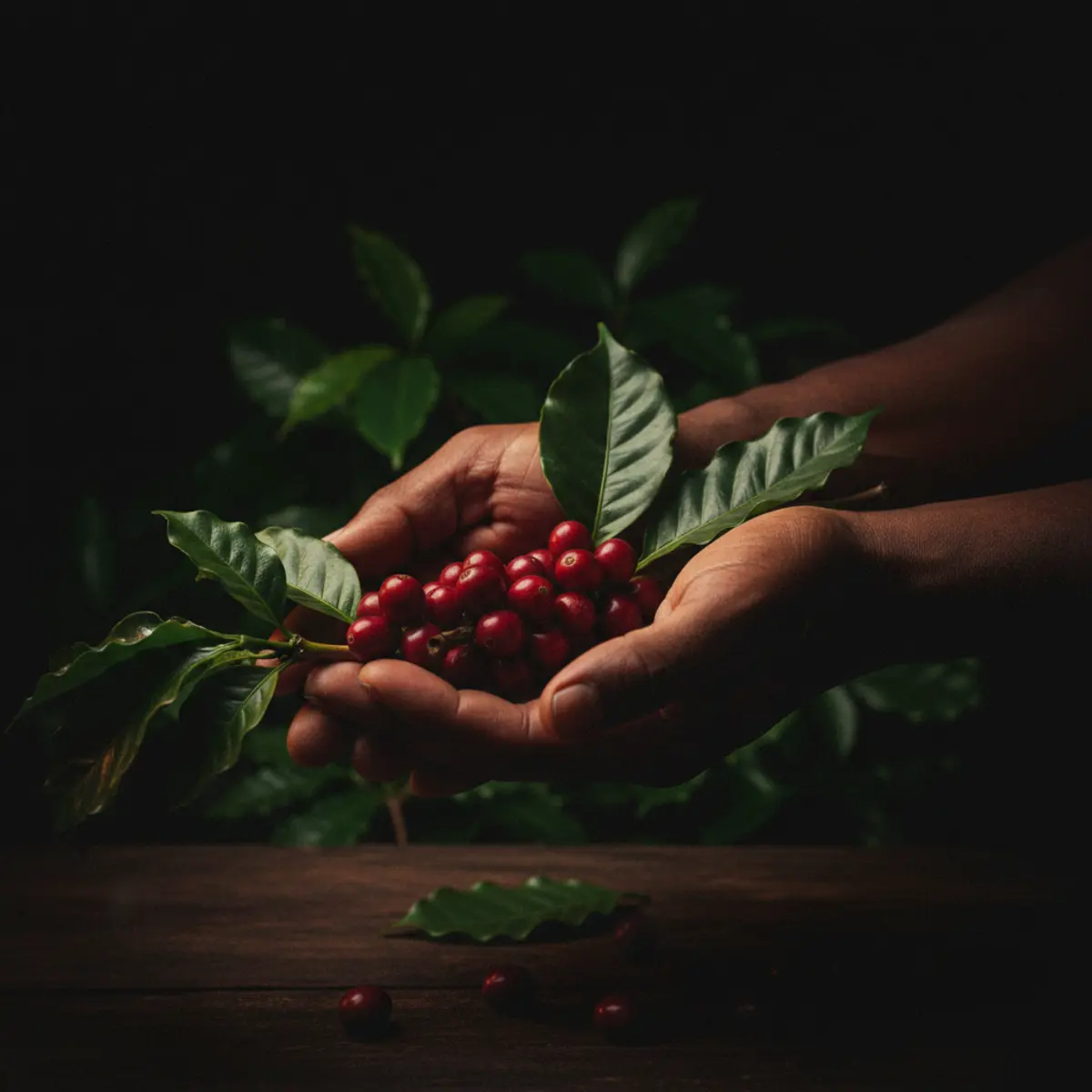
One thing I want to be clear about: the hand-picking process here is as precise as anywhere in Colombia. Farmers pick only the ripe and semi-ripe cherries from the tree. That level of selectivity, done entirely by hand, makes a measurable difference in the cup before the coffee even reaches a roaster.
Geography, Altitude, and Microclimate
The Sierra Nevada de Santa Marta rises from Colombia's Caribbean coast to over 5,700 meters — making it the world's highest coastal mountain range. Coffee grows here between 1,000 and 1,600 masl, where Caribbean breezes, intense heat at lower elevations, and rich soils create conditions found nowhere else in the country. That unique pressure between tropical heat and altitude elevation is precisely what shapes the character of this coffee.

Indigenous Heritage and How It Shapes the Coffee
The Arhuaco and Kogi communities aren't just growing coffee in the Sierra Nevada — they're actively defining what it means to farm in balance with the land.
For the Arhuaco people, there's a core principle that guides everything: what Mother Earth provides must be returned to her. That philosophy isn't abstract — it shows up directly in how they farm. Little to no pesticides or synthetic chemicals. Crops integrated into the existing forest canopy. A relationship with the land that most commercial agriculture couldn't replicate even if it wanted to.
And because the Sierra Nevada sits on Colombia's northern coast, the climate is intense — much hotter than Huila or Nariño. To grow quality coffee in that heat, these communities developed shade-grown systems that integrate coffee plants into the forest. The shade canopy slows down the cherry's ripening process significantly. And that slower ripening is where the sweetness lives.
How Traditional Practices Influence Flavor
Those methods — shade canopy, no chemical inputs, hand-picking at peak ripeness — don't just sound good on paper. They produce beans with higher density and a silky, persistent body that you can feel from the first sip.
What I've observed from cupping these beans is that the absence of chemical stress on the plant, combined with that slower maturation under the forest canopy, results in a balanced malic acidity that never tips into sharpness. No bitterness. No astringency. Just the kind of smooth, clean finish that defines high-end Colombian specialty coffee. The indigenous approach isn't a marketing story — it's the reason the cup tastes the way it does.
In my experience, no other Colombian region produces this exact combination of coastal terroir and ancestral farming discipline. It's a convergence that simply doesn't exist elsewhere.
Tasting Notes and Flavor Profile
Sierra Nevada coffee from Colombia delivers a fragrance of honey, caramel, walnut, and almond. In the cup, expect caramel, jasmine, and milk chocolate with a medium malic acidity, silky body, and a clean honey-like aftertaste. It's a balanced, expressive cup that reflects both the altitude and the indigenous farming methods behind it.
Let me walk you through what you're actually getting in the cup.
The fragrance hits you first — high intensity, honey-like, with notes of caramel, walnut, and almond. Once you introduce hot water, the aroma opens into something more syrupy: dulce de leche, walnut, jasmine. It's rich before you've even taken a sip.
In the cup, the flavor follows through with caramel, jasmine, and milk chocolate. The acidity is medium and malic — bright enough to keep things interesting, but smooth enough that it never dominates. The body is medium and silky. And the aftertaste? Pleasant, clean, honey-like. It lingers without overstaying its welcome.
The variety we work with at C8th is Castillo, washed process, grown at 1,000 to 1,400 masl. Washed processing keeps the clarity of origin intact — you taste the terroir, not the fermentation.
- Fragrance: Honey, caramel, walnut, almond
- Aroma: Dulce de leche, walnut, jasmine
- Flavor: Caramel, jasmine, milk chocolate
- Acidity: Medium, malic — bright but never sharp
- Body: Medium, silky
- Aftertaste: Clean, pleasant, honey-like
- Variety: Castillo | Process: Washed | Altitude: 1,000–1,400 masl
Processing Methods and Their Impact on Flavor
In the Sierra Nevada, washed processing is the most common method, and it's well-suited to this terroir — it preserves the clean, delicate florals and lets the malic acidity come through without interference. Natural and honey processes do exist in the region and tend to amplify the fruity, raisin-like notes (fig, dried fruit) that appear as secondary characteristics in the cup. Each process tells a slightly different version of the same origin story.
How to Brew and Pair Sierra Nevada Coffee
Sierra Nevada coffee is versatile enough to perform well across multiple brewing methods. For intensity and concentrated chocolate-caramel depth, use a Moka pot. For a balanced cup that highlights jasmine, caramel, and silky body, the Chemex is the best choice — 13g of coffee per 200ml of water, medium-coarse grind, water at 93–95°C.
Here's my honest take: the best brewing method is the one that matches what you're looking for in the cup that morning. Sierra Nevada coffee is versatile enough to handle multiple approaches well.
If I want intensity — a brew that pushes the acidity forward and amplifies the chocolate and caramel — I go with a Moka pot. It concentrates flavor and gives you something closer to espresso-style depth.
If I want balance, the Chemex is my go-to. It keeps all the flavors in harmony: the jasmine, the caramel, the silky body. My specific parameters for the Chemex are:
- Use 13g of coffee for every 200ml of water
- Grind medium to coarse
- Heat water to 93–95°C (just off the boil)
- Pour slowly in controlled circles, starting from the center
- Total brew time: 3.5 to 4 minutes
For food pairings, pistachio cream is genuinely one of the best matches I've found for C8th's Sierra Nevada coffee — the nuttiness in both the coffee and the cream creates something unexpected and rich. Closer to home, it pairs beautifully with rosquillas caleñas or Colombian empanadas. The sweet, savory contrast sets off the honey and chocolate notes in the coffee in a way that's hard to explain until you try it.

Sustainability and Fair Trade in the Sierra Nevada
Sustainability in the Sierra Nevada goes beyond certifications. Indigenous communities use eco-friendly processing systems that reduce water consumption, protect mountain watersheds, and maintain forest cover. At Clemente 8th, our sourcing is built on direct farmer relationships, full traceability, and community impact — ensuring the people growing this coffee benefit from every harvest.
Certifications matter, but they don't tell the full story. What I've seen firsthand in the Sierra Nevada goes beyond any label.
The farms we work with use eco-friendly processing systems that drastically reduce water consumption and prevent contamination of the watersheds flowing down from the mountains. That's not a talking point — it's an operational choice these farmers make every harvest.
Our sourcing at Clemente 8th is built on three pillars:
- Direct relationships with farmers to cut out unnecessary middlemen
- Full process traceability so we know exactly what we're getting and when
- Community impact — making sure the people growing this coffee have access to better practices and technology when they want it
The indigenous communities in the Sierra Nevada have been stewards of this land for centuries. What we try to do is support that, not extract from it. Having worked directly with Colombian farms in this region, I can say with confidence that the care these communities put into the land is inseparable from the quality in the cup.
What makes Sierra Nevada coffee different from other Colombian coffees?
Sierra Nevada coffee is grown on the world's highest coastal mountain range, where Caribbean breezes, intense heat, and indigenous shade-grown farming create a unique terroir. The result is a silky body, balanced malic acidity, and honey-like sweetness not found in coffees from Huila or Nariño.
What altitude is Sierra Nevada coffee grown at?
Sierra Nevada coffee is grown between 1,000 and 1,600 masl (meters above sea level) on the slopes of the Sierra Nevada de Santa Marta in northern Colombia. This altitude range, combined with Caribbean coastal breezes, produces the region's distinctive flavor complexity and clean cup profile.
What does Sierra Nevada coffee taste like?
Sierra Nevada coffee from Colombia typically features notes of caramel, jasmine, milk chocolate, walnut, and honey. The acidity is medium and malic — bright but smooth. The body is silky, and the aftertaste is clean and honey-like, making it approachable for both specialty coffee newcomers and experienced drinkers.
Who grows coffee in the Sierra Nevada de Santa Marta?
Coffee in the Sierra Nevada de Santa Marta is primarily grown by indigenous Arhuaco and Kogi communities, alongside other small-scale farmers. The Arhuaco people follow an ancestral philosophy of returning to the land what it provides — resulting in shade-grown, low-chemical farming that directly improves cup quality.
What is the best brewing method for Sierra Nevada coffee?
The Chemex pour-over is ideal for Sierra Nevada coffee — use 13g of coffee per 200ml of water, medium-coarse grind, and water at 93–95°C. For a more intense, espresso-style cup that amplifies chocolate and caramel notes, a Moka pot is an excellent alternative.
If you want to taste what this origin actually produces — the silky body, the honey aftertaste, the balance that comes from slower ripening under a forest canopy — explore Clemente 8th's single-origin Colombian coffees and discover the Sierra Nevada difference for yourself.


